Requested peak-wavelength band. The full emission spectrum extends beyond its peak.
305–310 nm / REPTILE LIGHTING DEVELOPMENT
Reptile UVB LED Modules
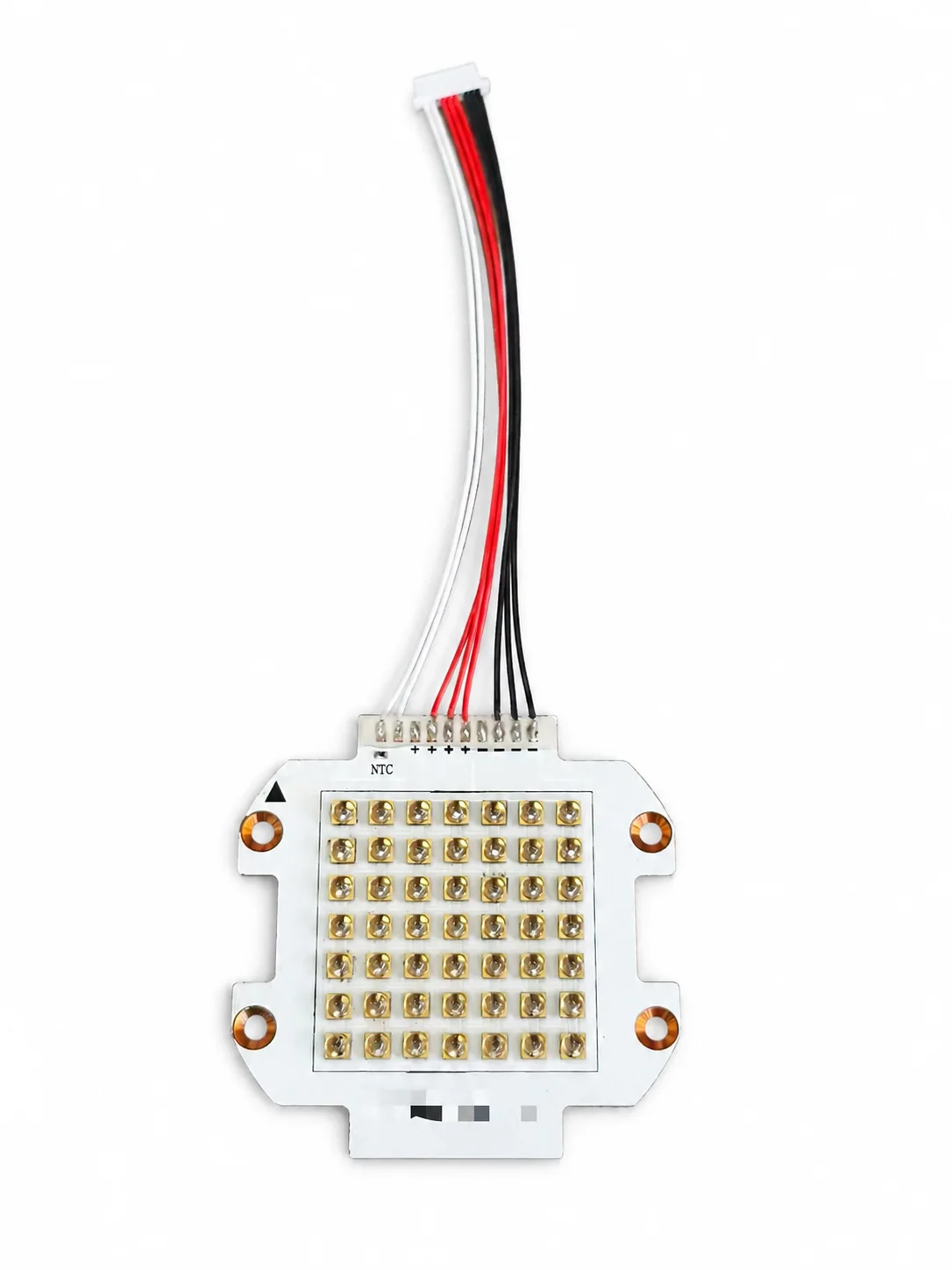
Develop a reptile UVB lighting module around a 305–310 nm emitter brief. Review the sample optical data, then define the spectrum, working distance, irradiance distribution and thermal requirements for the intended fixture and species.
01
305–310 nm emitter selection brief
02
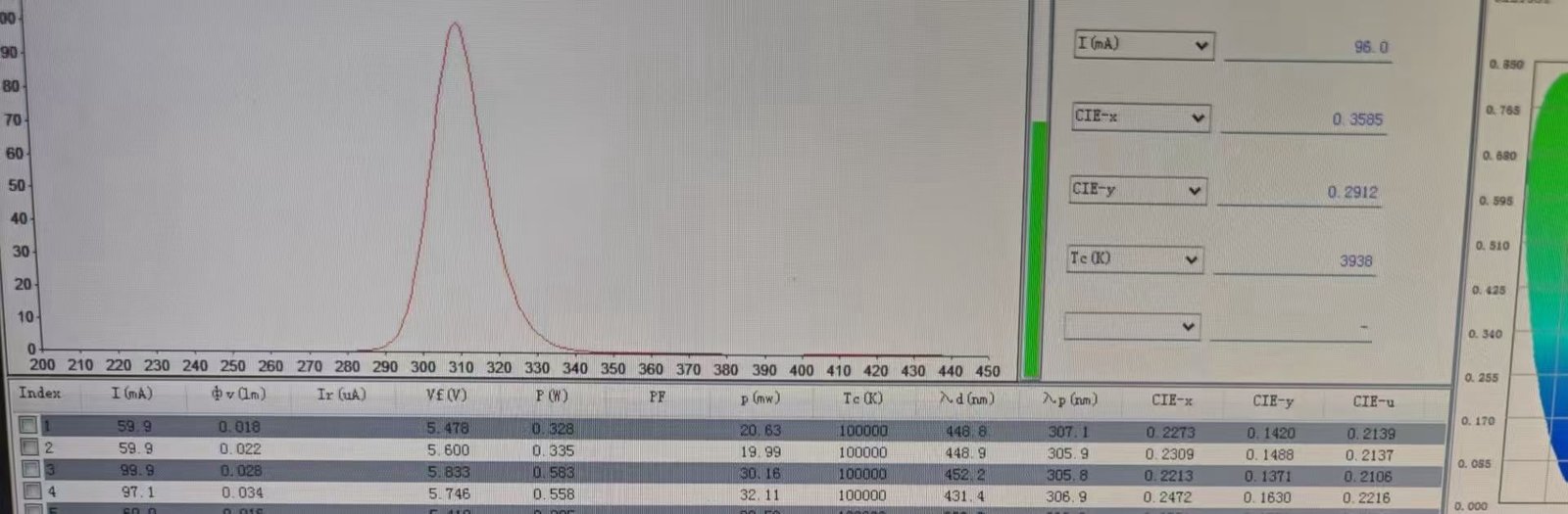
30.16–32.11 mW in two supplied sample records
03
04Custom PCB, optics, thermal path, and control channels
Review the inputs needed to start
↓APPLICATION FIRST
Emitter Selection for Reptile UVB Lighting
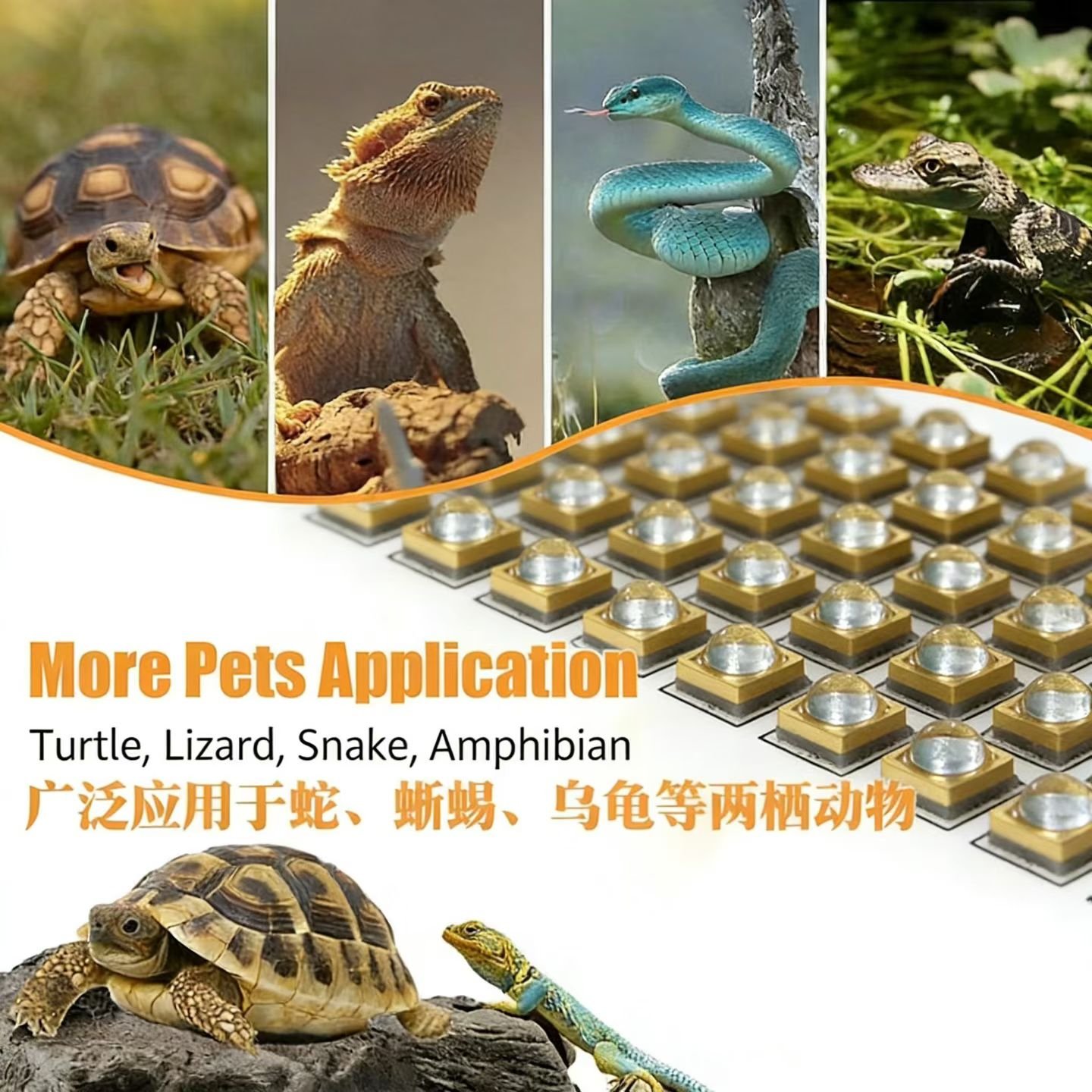
Appropriate UVB exposure supports cutaneous vitamin D3 synthesis in many reptiles, contributing to normal calcium metabolism alongside suitable diet and husbandry. A useful module is not simply the strongest emitter: its complete spectrum, distribution, distance, shade provision, and daily control must suit the species and finished enclosure.
UV EXPOSURE / ENGINEERING SAMPLE
Validate the fixture before animal use.
UV radiation can damage eyes and skin. Do not look directly into operating emitters. Control unintended exposure during assembly and testing. Animal-use suitability requires qualified species-specific review and full-fixture spectral and exposure measurements; these samples are not human treatment devices.
01 / SOURCE & SAMPLE DATA
Sample Optical Data
The supplied records support an engineering discussion. They are not a certified datasheet, a production guarantee, or proof of animal-use suitability.
Displayed sample radiant flux, not irradiance at the animal or finished-module output.
Optical power ÷ electrical input for the same two records. Complete-fixture losses are not included.
Sample measurement records
REFERENCE ONLYValues below are transcribed from the four fully visible rows of the supplied instrument screenshot. Highlighted rows are the two records near 100 mA. Scroll horizontally on a small screen.
| Record | Current mA | Forward voltage V | Electrical input W | Radiant flux mW | Peak λp nm | Calculated ratio % |
|---|---|---|---|---|---|---|
| 1 | 59.9 | 5.478 | 0.328 | 20.63 | 307.1 | 6.29 |
| 2 | 59.9 | 5.600 | 0.335 | 19.99 | 305.9 | 5.97 |
| 3 | 99.9 | 5.833 | 0.583 | 30.16 | 305.8 | 5.17 |
| 4 | 97.1 | 5.746 | 0.558 | 32.11 | 306.9 | 5.75 |
Example: (30.16 mW ÷ 1,000) ÷ 0.583 W × 100 = 5.17%. Calculated from rounded display values; not an independent measurement.
View the original measurement screenshot
Confirm before specification release
Device part number and emitter count, sample identity, current limits, wavelength bin and bandwidth, test temperature, calibration, measurement geometry, spectral integration range, uncertainty, thermal resistance, and aging data are not established by this screenshot.
02 / REPTILE FIXTURE DEVELOPMENT
Irradiance Mapping and Habitat Gradients
Reptile species differ in their natural light exposure and behavior. Develop the basking zone, lower-exposure areas, and shaded retreat together, with the animal’s accessible positions included in the measurement plan.
- Light where it is usedMap the finished fixture at actual working distances, through the intended mesh or cover.
- Channels with distinct rolesEvaluate UVB, UVA, visible light, and heat provision separately. One UVB emitter does not reproduce sunlight.
- Control that follows the briefDefine daily timing, shade access, independent adjustment, temperature derating, and safe fault behavior.
- Measurements before claimsUse a full spectral scan and qualified exposure assessment; optical mW alone cannot set an animal-use distance or schedule.
Research context: UVB increased vitamin-D status in a controlled blue-tongued skink study; this is not a universal dosing protocol. Read the study ↗
Discuss your fixture and test plan03 / SPECTRUM BEFORE PROMISES
Spectrum and Fixture Requirements
The UVB emitter, any UVA channel, optics, and fixture must be evaluated as one spectral system. Adding a wavelength is not the same as validating a biological outcome.
UVB band
This page uses the WHO/CDC band definition. The requested 305–310 nm emitter peak lies inside it; a 280–330 nm span includes both UVB and part of UVA.
UV band definitions ↗A spectral region to review
A published analysis of 18 reptile UVB LED lamps identified low output in this region and a potential vitamin-D overproduction risk. The authors called for long-term animal studies; this is a design caution, not a validated recipe.
Reptile LED spectrum study ↗No biological “off switch” claim
325 nm lies in short-wave UVA, not UVA1. A single added emitter cannot be claimed to close a UVB absorption channel, guarantee vitamin-D regulation, or make continuous exposure safe.
Specify and measure the complete channel balance, then validate the intended application.
04 / OTHER UVB DEVELOPMENT BRIEFS
One spectral region.
Different validation requirements.
These are separate research or equipment-development directions, not additional certified functions of the reptile sample. Share the actual wavelength, process, exposure, and acceptance requirements for feasibility review.
01Clinical narrowband UVB+
Clinical NB-UVB commonly uses 311–313 nm light for specific skin conditions under a controlled treatment protocol. A 305–310 nm reptile emitter is not a substitute. Medical-device development requires a separate intended use, dose-control architecture, clinical oversight, and applicable regulatory review; no treatment efficacy is claimed here.
British Association of Dermatologists: NB-UVB ↗02Materials & weathering research+
UVB is used in some accelerated material-aging systems. Define spectral distribution, irradiance, temperature, humidity, exposure cycle, and the required test method. A narrowband LED is not automatically equivalent to a UVB-313 fluorescent weathering lamp or compliant with a test standard.
Q-Lab: weathering lamp selection ↗03Plant & biological research+
UVB can trigger plant acclimation responses and, at damaging exposures, DNA injury and mutations. Effects depend on species, developmental stage, spectrum, and dose. Research-induced mutation is not a promise of a predetermined beneficial trait. Yield, drought tolerance, and disease resistance require controlled studies rather than a universal lighting claim.
Primary research on plant UVB exposure ↗04Photochemistry & coating trials+
Begin with the reactant or photoinitiator absorption spectrum, formulation, optical path, target conversion, and process temperature. UVB is not a general guarantee of deep or complete curing. Penetration, surface inhibition, material damage, and conversion must be measured using the actual formulation. Pharmaceutical or catalyst applications need their own chemistry and process validation.
Send the formulation and process brief →DEFINE BEFORE DESIGN
Fixture Integration and Thermal Design
Confirmed requirements, preferred targets, and open questions can all be included in the first brief. Unknown values stay visible until they are reviewed.
Species & enclosure
Target species and life stage, enclosure dimensions, basking location, closest animal access, shaded retreat, mesh, and qualified husbandry requirements.
Full spectral brief
UVB peak and bandwidth, short-wave emission, UVA combination, visible-light channels, emitter bins, and calibrated spectral measurement.
Exposure map
Working distances, center and edge irradiance, UVI with instrument suitability checked, uniformity, hotspots, optics, mesh transmission, and measurement grid.
Drive & control
Constant-current drive, supply input, number of emitters, independent channels, dimming method, timer, restart behavior, and fault shutdown.
PCB & heat path
Board outline, material, mounting, connector position, heat sink, thermal interface, ambient conditions, and current derating.
Acceptance & production
Spectrum and output acceptance limits, temperature and aging tests, safety review, sample quantity, production volume, target date, and traceable test records.
PROJECT FIT
UVB module formats to discuss
Final suitability depends on the measured spectrum and irradiance in the completed fixture and habitat, not on the module name alone.
Basking-zone modules
Focused coverage coordinated with working distance, reflector, heat sink, guard, and enclosure layout.
Linear fixture modules
Distributed emitters, wiring, optics, thermal path, mounting, and end-to-end coverage.
UVB + UVA combinations
Separate spectral targets, drive channels, optics, thermal load, timing, and measurement.
Replacement module projects
Review existing geometry, electrical input, fixture, performance target, aging behavior, and required evidence.
CONTROLLED DEVELOPMENT PATH
From project brief to approved handoff.
A review result, prototype, or sample remains a project stage. Production begins only from the information and acceptance criteria approved for that project.
- 01
Application review
Confirm geometry, electrical input, optical target, thermal conditions, quantity, and the available source material.
- 02
Module & sample plan
Define the board, emitter arrangement, drive conditions, connections, mounting, and prototype route.
- 03
Measured evaluation
Review the agreed electrical, optical, thermal, mechanical, and safety-related acceptance points.
- 04
Approved handoff
Carry the confirmed design, BOM, assembly, inspection, labeling, and packing information into production.
DESIGN & MANUFACTURING SUPPORT
Designed by us.
Built with trusted partners.
Our in-house PCB design connects your product requirements with manufacturing and testing capabilities at our partner factories.
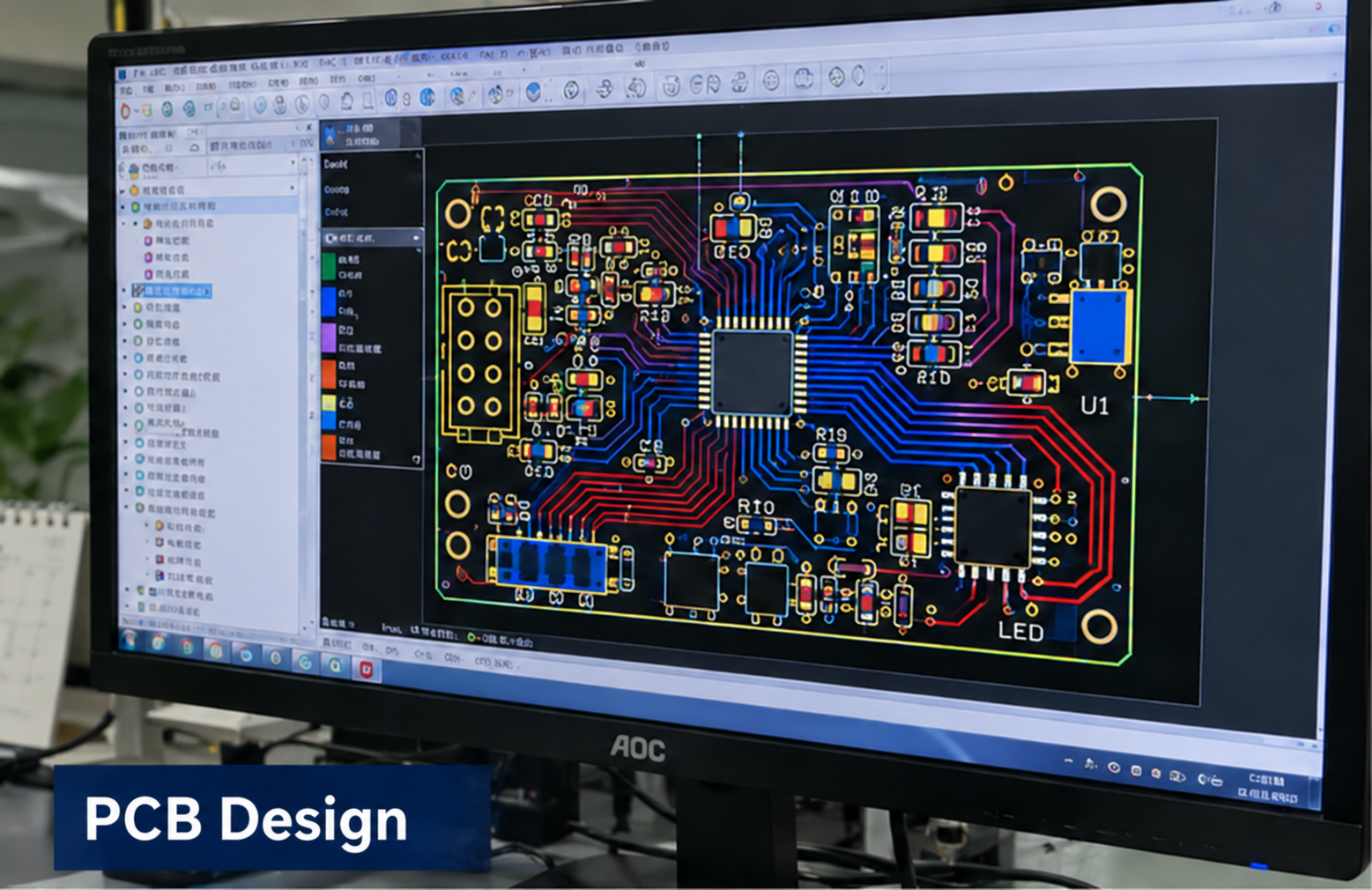
In-house design
PCB Design
Circuit and PCB layout developed around your product requirements.
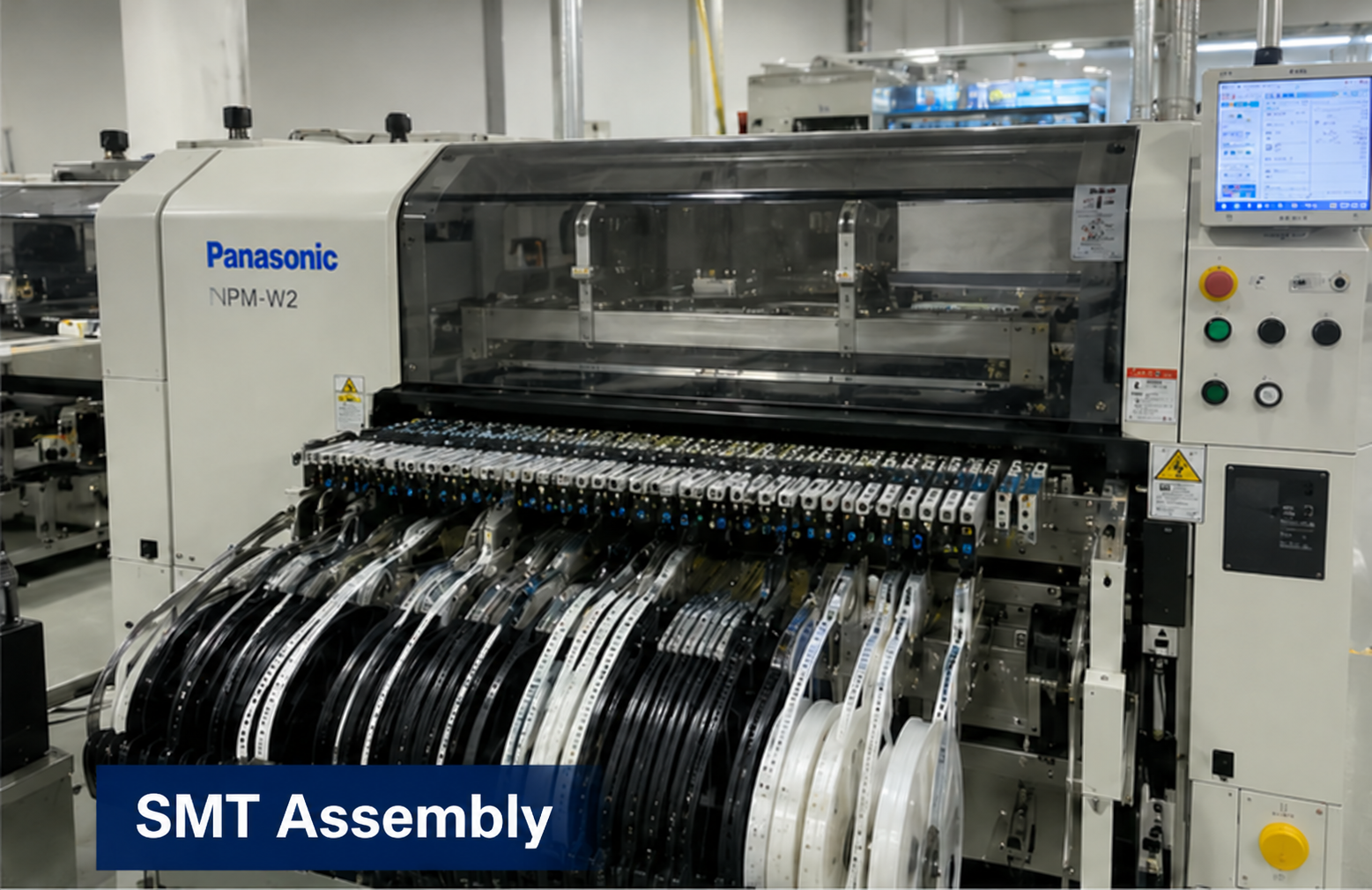
Partner factory
SMT Assembly
Component placement and assembly for the approved board design.
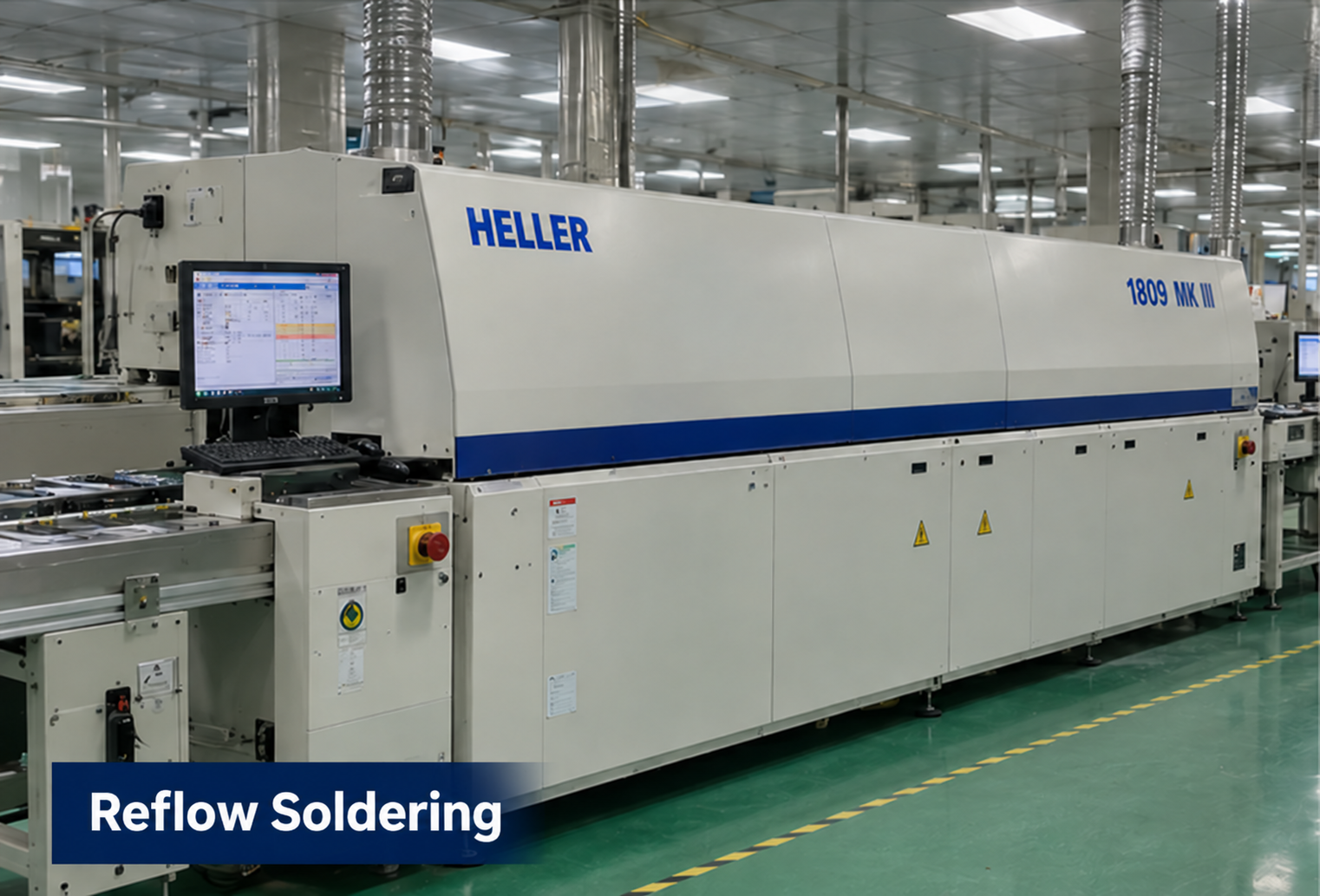
Partner factory
Reflow Soldering
Reflow soldering as part of the board assembly process.
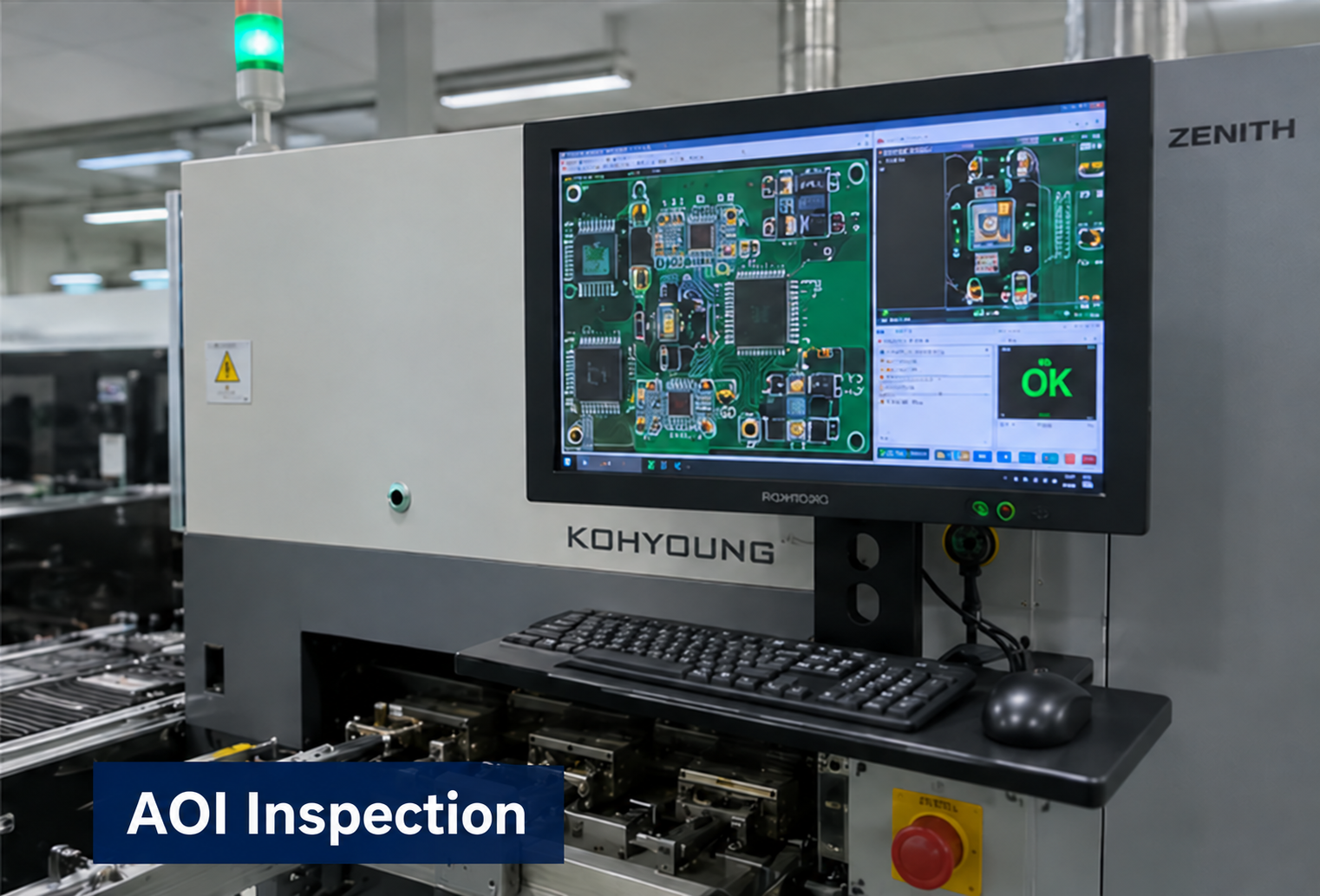
Partner factory
AOI Inspection
Optical inspection to support assembly quality checks.
Partner factory
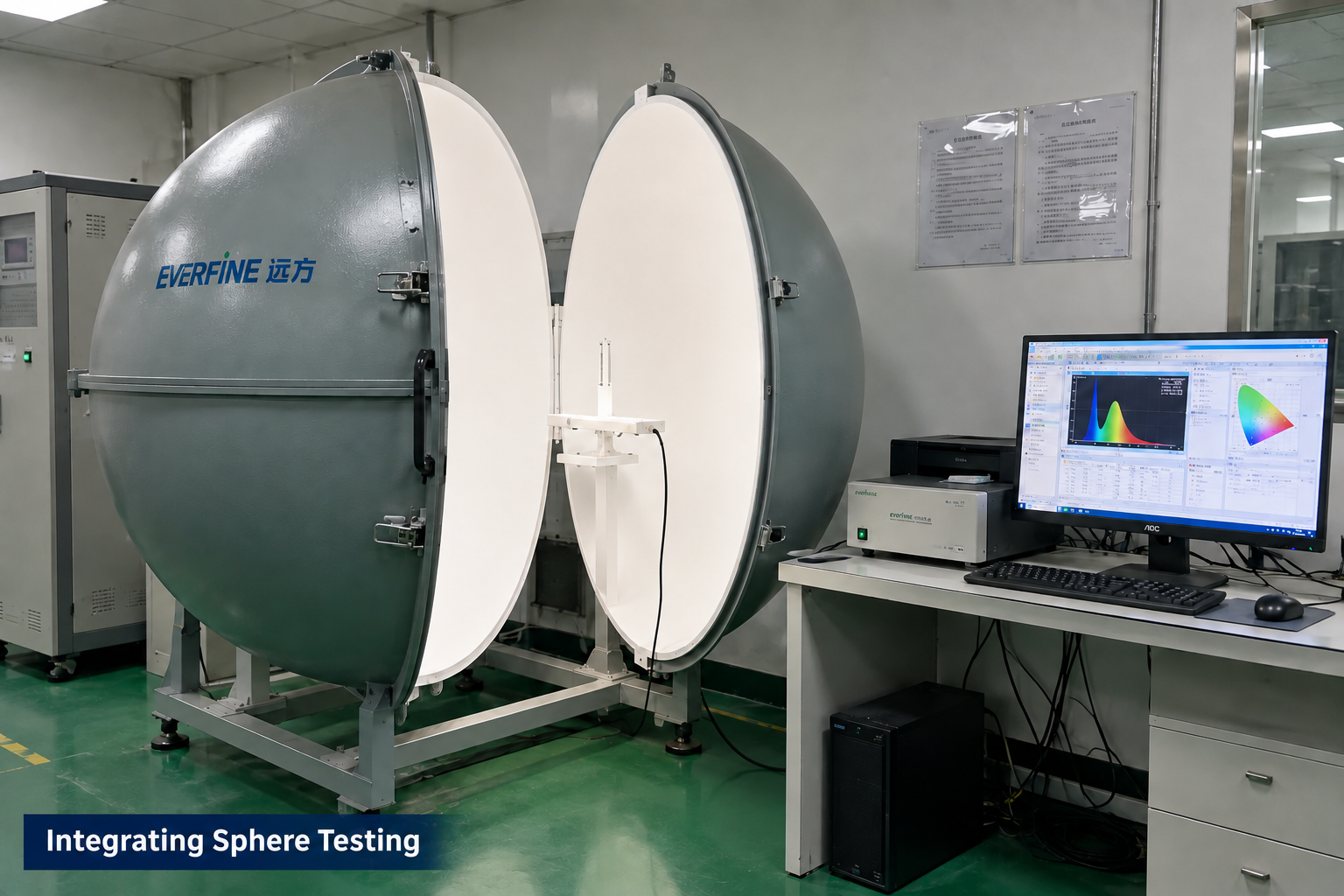
Integrating Sphere Testing
Optical measurement for applicable LED module projects.
PROJECT-SPECIFIC VALIDATION
Manufacturing and testing scope is agreed for each project. Integrating sphere testing applies to LED optical projects; it is not a required test for every control board. These images illustrate capabilities, not test results or certification for this product.
PROJECT QUESTIONS
Before the first technical review.
These answers describe how a project can begin. They do not promise an unreviewed specification, performance result, certification, schedule, or price.
Is 30 mW a guaranteed module output?
No. The supplied screenshot contains two near-100 mA records with 30.16 and 32.11 mW radiant flux. These are sample reference values, not a production minimum or complete-module rating. The device identity, emitter count, bin, temperature, instrument calibration, and test method must be confirmed before an output specification is released.
What does efficiency above 5% mean here?
Dividing the displayed optical power by the displayed electrical input gives approximately 5.17% and 5.75% for those two records. This is an optical-to-electrical ratio at the measured device, not a verified wall-plug efficiency for a complete fixture with driver and optical losses.
Does adding a 325 nm LED prevent excess vitamin D3?
That cannot be guaranteed. Published spectral research raises concerns about UVB LED lamps with little output at 315–335 nm and calls for further animal studies. A single 325 nm emitter is not proof of a solar-equivalent spectrum or biological safety. Review the complete measured spectrum, channel balance, exposure, and qualified species-specific validation.
What distance and daily exposure time should I use?
There is no universal setting based on emitter wavelength or mW alone. Define the species, enclosure, access distances, measured exposure distribution, shade, and day–night schedule with qualified veterinary or zoological guidance. Do not infer an animal-use schedule from the sample table.
Can UVB, UVA, and visible LEDs share one PCB?
Yes, a combined layout can be evaluated. Independent drive channels allow the spectral contributions to be adjusted and measured separately. PCB spacing, optics, thermal limits, control settings, and fault behavior need to be agreed for the fixture.
Can this 305–310 nm sample be used for human skin treatment?
This page does not offer a medical treatment device. Clinical narrowband UVB commonly uses a different 311–313 nm treatment specification, controlled dosing, clinical supervision, and device-specific safety and regulatory review. Reptile lighting samples are not interchangeable with clinical equipment.
What should I send for a quotation?
Send the target species or research application, board dimensions, mounting drawing, power input, desired channels, working distance, coverage and exposure targets, prototype quantity, production estimate, and target date. Include your required test and approval criteria; unknown values can be listed for engineering review.
PROJECT INQUIRY
Send your reptile uvb lighting modules requirements.
Include the application, confirmed inputs, preferred targets, expected quantity, target date, and available drawings, photos, files, or samples.
Inquiry about: Reptile UVB Lighting Modules